Visits

Thursday, 26 April 2018

Our Water Footprint


The water footprint measures the amount of water used to produce services we use. It can also tell us how much water is being consumed in a specific country or place. The water footprint is measured in units of volume (liters or cubic meters).

It makes us aware of the water consumption we need in all our activities. Also it helps us to  a reference value in our use of water and above all to value where we can improve as an Organization. 
Our water footprint its about 3473 cubic meter per year. The area in which more water we used is the domestic one.
  There are three types of water footprint:

Green water footprint:  is water for precipitation. It's very important for agricultural, horticultural and forestry products.

Blue water footprint: is water that cames from surface or groundwater resources and is either evaporated .Irrigated agriculture, industry and domestic water use can each have a blue water footprint.

Grey water footprint: considers point-source pollution discharged to a freshwaterdirectly through a pipe or indirectly through runoff.

Thursday, 19 April 2018

Water Culture and Art


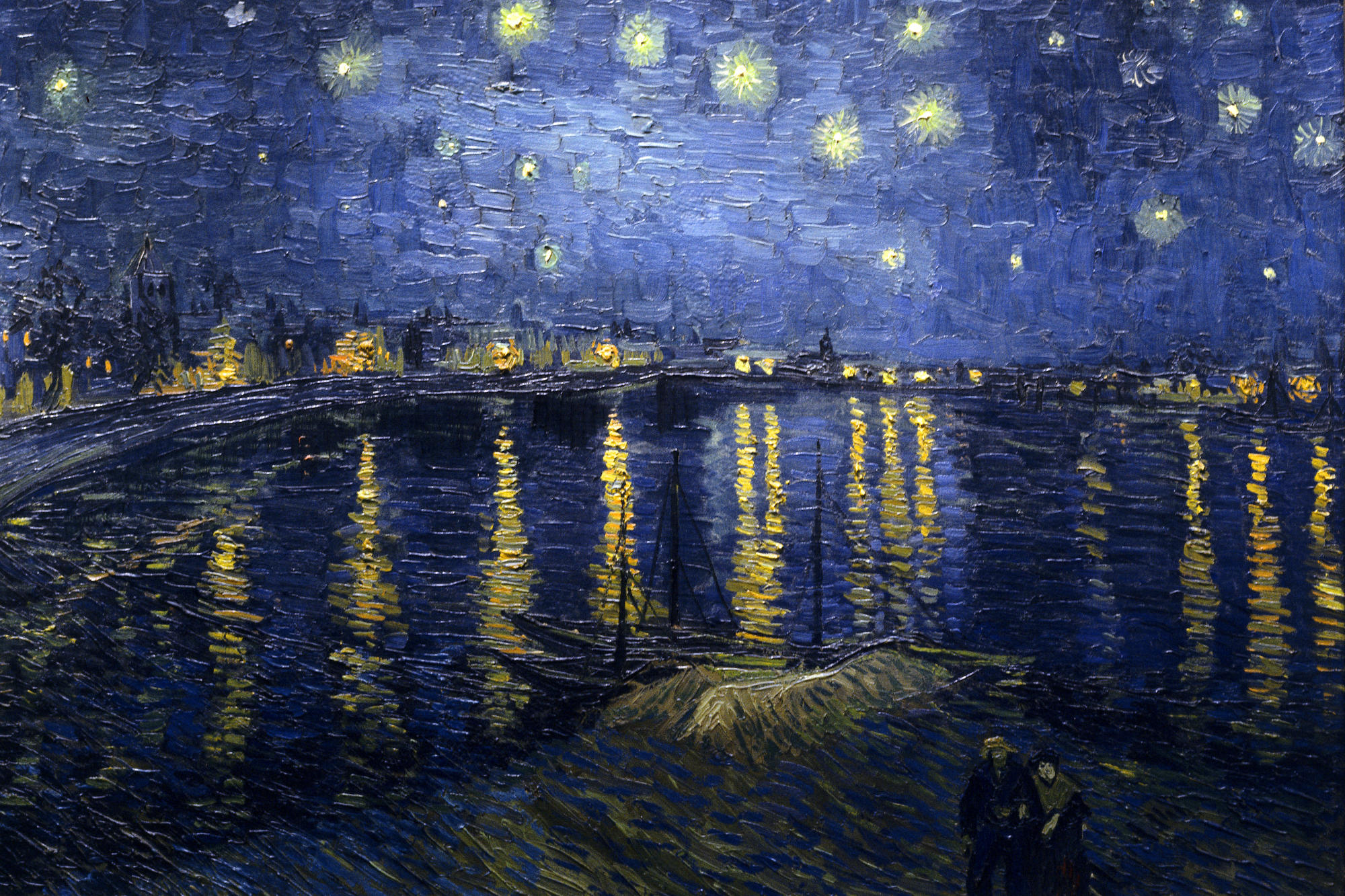
Resultado de imagen de la noche estrellada sobre el ródano


     The starry night over the Rhône.               This masterpiece was painted by Vicent Van Gogh in 1888. It shows the river of Rhône. Rhône is a river that starts in the Swiss mountains. It finishis into the Mediterranean Sea and also crosses the south of France, before separating into two rivers.


Water is the most important element for life. People is made of a 70% of water, and the Earth too. Water makes approximately 80% of the brain and is an essential element in neurological transmissions.Children/young people should drink around 1.5 litres of water each day. This is approximately 6 to 8, 200ml glasses. Also, water is the universal solvent , since it has a large capacity  to dissolve substances. Even  can dissolves almost all solid bodies.
Water has been used since antiquity as a symbol by which to express devotion and purity. Some cultures, like the ancient Greeks, went as far as to worship gods who were thought to live in and command the waters. Whole cities have been build by considering the location and availability of pure drinking water. The place of gathering was around the wells, which is perhaps the following trend in building fountains in the middle of squares. 

Video of  Importance of water


Monday, 16 April 2018

Welcome to our blog!

Hello friends! We are five crazy science students, willing to learn and have fun. In this blog we are going to publish our works and tests. With the help of our teacher and mates we will get what we want. 

We hope you enjoy it and let's have fun!